

Quiz Clothing UK enters administration, jobs at risk in a development that has sent shockwaves across the British fashion retail industry as the once-popular occasionwear brand struggles under financial pressure. The announcement confirmed that administrators have taken control after months of declining sales and rising operating costs. Although Quiz Clothing attempted to stabilize its business through restructuring and cost control, economic realities proved overwhelming. Consequently, uncertainty now surrounds the future of the brand, its employees, and its physical store network. This collapse reflects wider struggles within the UK retail sector, particularly for mid-market fashion brands facing changing consumer habits.
Background of Quiz Clothing UK
Quiz Clothing UK built its reputation as a fashionable yet affordable womenswear brand, focusing heavily on partywear and special-occasion outfits. Founded in the late 1990s, the company expanded steadily throughout the 2000s, eventually establishing a strong presence in shopping centres and high streets. At its peak, Quiz operated hundreds of stores and concessions while also growing its online business. However, market conditions evolved rapidly. As consumer tastes shifted and competition intensified, Quiz found it increasingly difficult to maintain relevance. Although the brand retained loyal customers, sales momentum slowed over time, laying the groundwork for its eventual financial distress.
Brand Identity and Target Audience
Quiz targeted younger women seeking glamorous outfits for social events, weddings, and nights out. While this niche once delivered strong demand, lifestyle changes reduced the frequency of such purchases.
Financial Pressures Leading to Administration
Quiz Clothing UK faced sustained financial pressure caused by rising costs and shrinking margins. Inflation increased rent, wages, energy bills, and logistics expenses, placing strain on profitability. Meanwhile, sales failed to recover fully after pandemic-related disruptions. Although management implemented cost-saving initiatives, these measures did not generate sufficient relief. Therefore, cash flow problems intensified, forcing the company to seek external intervention. Administration became unavoidable once financial obligations exceeded available resources.
Inflation and Cost Increases
Inflation significantly raised supplier and transportation costs. As a result, Quiz struggled to maintain competitive pricing without sacrificing margins.
What Administration Means for Quiz Clothing
Administration places the company under the control of licensed insolvency practitioners tasked with protecting creditors while exploring recovery options. Although stores may continue operating temporarily, administrators will evaluate which locations remain viable. Administration does not automatically mean closure, yet it signals severe financial distress. Consequently, difficult decisions regarding restructuring, asset sales, or liquidation lie ahead. For Quiz Clothing, this period represents a critical crossroads that will determine whether the brand survives.
Administrator Role and Decision-Making
Administrators assess financial health, negotiate with creditors, and seek buyers. Their goal involves maximizing value while minimizing losses.
Jobs at Risk Across the UK
One of the most serious consequences of Quiz Clothing UK entering administration involves its workforce. Hundreds of employees work across retail stores, distribution centres, and corporate offices. Administration places many of these roles at risk, creating widespread anxiety among staff. Although some employees may retain their positions temporarily, redundancies often follow store closures or restructuring efforts. Therefore, the human impact of this collapse remains significant and deeply concerning.
Impact on Store-Level Employees
Retail workers face uncertainty about continued employment. Many depend on these roles as primary income sources, heightening stress levels.
Store Closures and High Street Consequences
Quiz operates numerous stores across UK high streets and shopping centres. Administration often results in selective store closures to reduce operating costs. Consequently, vacant units may increase, further weakening struggling retail areas. Local economies suffer as foot traffic declines, affecting nearby businesses. Therefore, Quiz’s difficulties extend beyond the company itself and contribute to broader high street challenges.
Landlord and Shopping Centre Impact
Landlords face reduced rental income and difficulty attracting new tenants. This situation delays recovery for already pressured retail environments.
Online Operations and Digital Performance
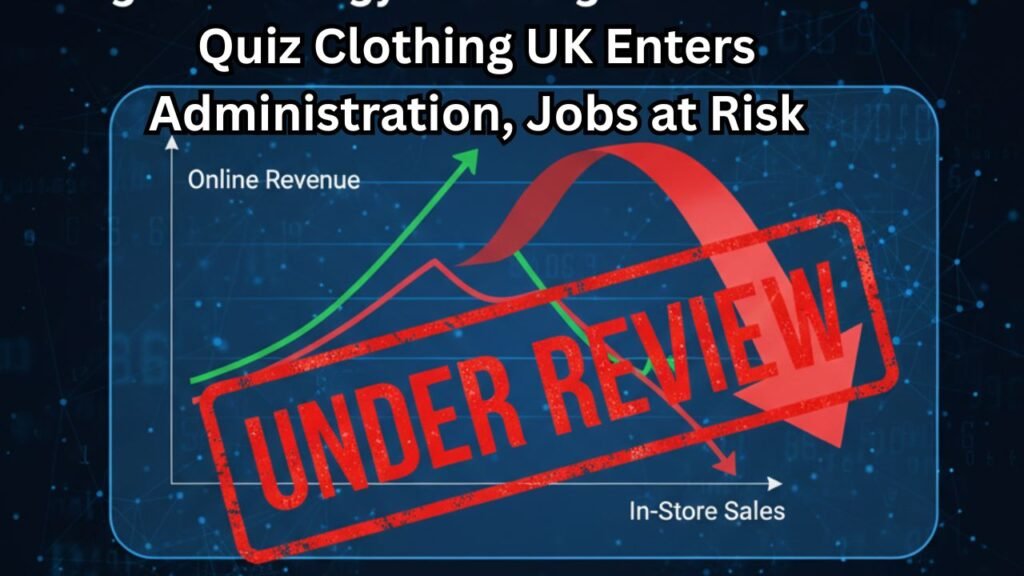
Quiz invested in e-commerce to offset declining in-store sales. Although online revenue grew, it failed to fully compensate for physical retail losses. Intense competition from major online fashion retailers limited growth potential. Administration has now placed Quiz’s digital operations under review, creating uncertainty for customers accustomed to online shopping convenience.
Digital Strategy Challenges
Limited differentiation and high marketing costs restricted online performance. As a result, digital channels did not deliver sustainable profitability.
Supplier and Creditor Implications
Suppliers face uncertainty regarding unpaid invoices and future orders. Administration often freezes certain payments, placing financial strain on manufacturing partners and logistics providers. Smaller suppliers remain especially vulnerable. Consequently, Quiz’s collapse may trigger a ripple effect across the fashion supply chain, impacting additional jobs and businesses.
Supply Chain Vulnerability
Fashion supply chains operate on tight margins. Retail insolvencies can quickly destabilize dependent suppliers.
Consumer Confidence and Brand Reputation
Quiz Clothing UK also issued a direct message to customers, stating, “We regret to tell you that QUIZ is currently offline. Our stores will remain open for a period of time. We are grateful to everyone that has supported us over the years.” This statement acknowledged the seriousness of the situation while attempting to reassure loyal shoppers. However, consumer confidence weakened rapidly as online access disappeared. Many customers hesitated to make in-store purchases due to uncertainty over returns and gift cards. Consequently, trust erosion accelerated during a critical period for the brand.
Customer Trust and Purchasing Behavior
Uncertainty discourages spending. Even loyal customers delay purchases when a brand enters administration.
Comparison With Other UK Retail Failures
Quiz Clothing joins a growing list of UK retailers entering administration in recent years. Similar brands faced rising costs, declining footfall, and changing consumer behavior. Therefore, Quiz’s collapse reflects structural challenges rather than isolated failure. The retail landscape continues to evolve rapidly, leaving little margin for error.
Lessons From Past Administrations
Brands that survive typically streamline operations and embrace digital-first strategies. Without adaptation, liquidation often follows.
Rising Operational Costs and Profitability
Energy prices, wages, rent, and logistics costs increased significantly over recent years. Consequently, fixed expenses consumed a larger portion of revenue. Quiz struggled to absorb these increases while remaining price competitive. Therefore, profitability steadily declined, pushing the company closer to insolvency.
Wage Pressures and Employment Costs
Minimum wage increases improved worker earnings but raised payroll expenses for retailers already under strain.
Changing Consumer Spending Patterns
UK consumers reduced discretionary spending amid economic uncertainty. Occasionwear purchases declined as social habits shifted. Consequently, Quiz’s core product category suffered disproportionately. This shift directly impacted revenue and inventory turnover.
Lifestyle Changes Affecting Demand
Remote work and casual fashion trends reduced demand for formal and partywear collections.
Strategic Decisions and Timing Issues
Quiz’s expansion relied heavily on physical retail. Although management later shifted focus, timing proved unfavorable. Delayed adaptation reduced flexibility and increased exposure to rising costs. Therefore, strategic missteps contributed to current challenges.
Risks of Overexpansion
Rapid store growth increases fixed obligations. When demand falls, these commitments become liabilities.
Potential Buyers and Rescue Scenarios
Administration creates opportunities for acquisition. Investors may purchase the brand, intellectual property, or online operations. However, interest depends on recovery potential. Therefore, outcomes range from partial rescue to complete shutdown.
Brand Recognition as an Asset
Despite challenges, Quiz retains name recognition. This intangible value may attract buyers seeking an established label.
Impact on Shareholders and Investors
Shareholders typically face losses during administration. Market confidence weakens as uncertainty grows. Consequently, investor appetite for retail stocks remains cautious.
Investor Sentiment Toward Retail
Retail investments face scrutiny due to volatility and frequent insolvencies.
Government Policy and Retail Support
Retail collapses renew debate around business rates, energy support, and employment protection. Although assistance exists, critics argue it remains insufficient. Quiz’s administration adds urgency to calls for reform.
Employment Support Measures
Redundancy payments offer short-term relief, yet reemployment remains challenging.
Future Outlook for Quiz Clothing
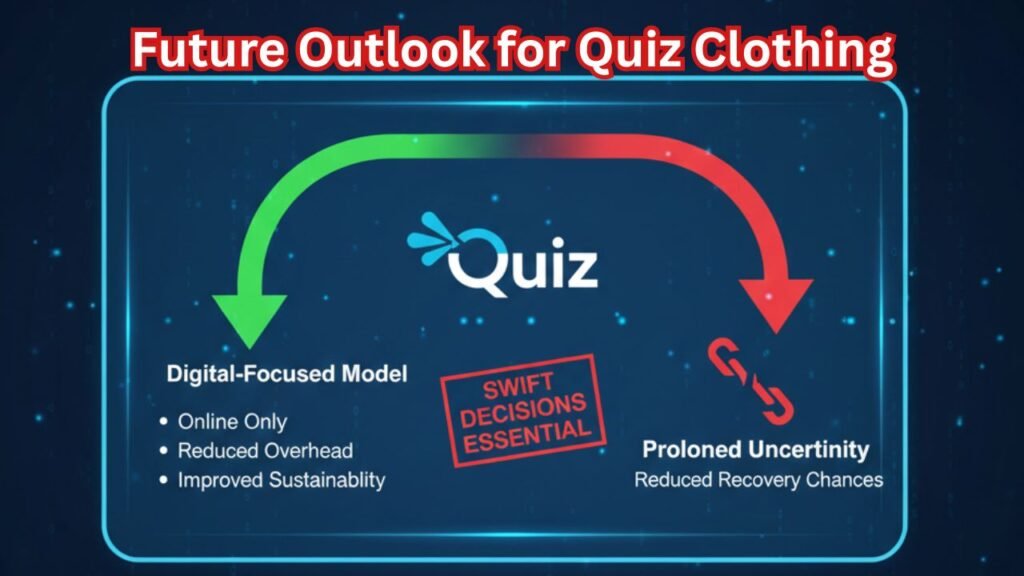
Quiz’s future depends on restructuring success or acquisition outcomes. A streamlined digital-focused model could survive. However, prolonged uncertainty reduces recovery chances. Therefore, swift decisions remain essential.
Possible Brand Relaunch Paths
Some brands reemerge online only, reducing overhead and improving sustainability.
Wider Implications for UK Fashion Retail
Quiz Clothing UK enters administration during a fragile period for fashion retail. Structural changes continue reshaping the sector. Brands lacking agility face increasing risk. Therefore, Quiz’s collapse serves as a cautionary tale.
Industry Adaptation and Innovation
Retailers must innovate in pricing, sustainability, and customer engagement to remain competitive.
Conclusion
Quiz Clothing UK enters administration amid rising costs, declining demand, and shifting consumer behavior, placing hundreds of jobs at risk and highlighting deep challenges within the UK retail sector. While administration offers a chance for restructuring or acquisition, uncertainty dominates the brand’s future. Employees, suppliers, landlords, and consumers all feel the impact. Ultimately, Quiz’s collapse underscores the urgent need for adaptability, cost control, and strategic clarity in modern retail.
Frequently Asked Questions (FAQs)
Why did Quiz Clothing UK enter administration?
Quiz entered administration due to rising operating costs, declining sales, and sustained financial pressure.
How many jobs are at risk at Quiz Clothing UK?
Hundreds of roles across stores, warehouses, and corporate offices face potential redundancy.
Are Quiz Clothing stores still open?
Stores remain open temporarily while administrators assess restructuring options.
Is Quiz Clothing’s website offline?
Yes, Quiz confirmed that its online store is currently offline during administration.
Can customers still return items?
Returns depend on administrator policies, which may change during the process.
Could Quiz Clothing be rescued?
A rescue remains possible through acquisition or restructuring, though outcomes remain uncertain.